Best Workwear Fabrics for Factory Workers
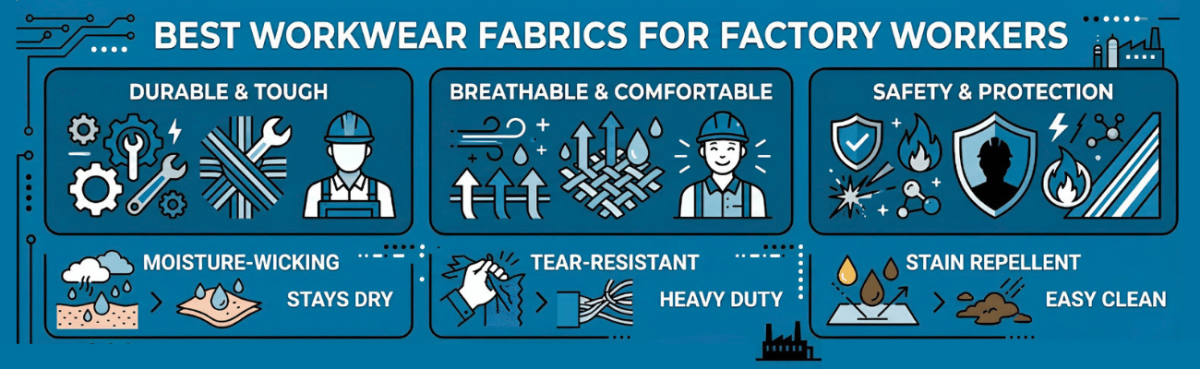
Factory uniforms today are expected to deliver far more than a professional appearance. In today’s industrial settings, workwear fabrics really matter for comfort, safety, durability, and even productivity. The right fabric helps workers remain comfortable during long shifts, supports proper PPE usage, performs better in Indian weather conditions, and withstands repeated industrial washing.
That’s why more and more companies are focusing on fabric quality when they buy uniforms from a trusted uniform manufacturer in India. It does not matter if it’s automotive plants, logistics teams, engineering workshops, pharma units, or heavy manufacturing; most businesses want industrial workwear that balances breathability, comfort, durability, and long-term value.
A factory worker is often in a demanding environment for about 8–12 hours a day. If the fabric feels too heavy, traps heat, tears way too easily, or gets uncomfortable after a few washes, it doesn’t just “feel off”. It can slowly affect efficiency and even safety behaviour on the floor. Choosing the right fabric is not some small detail; it is critical.
Why Fabric Quality Matters in Industrial Uniforms
Many factories invest in machinery, PPE, safety protocols, and overall operational systems. But uniforms are sometimes treated like a basic, low-cost purchase decision.
In real life, fabric quality touches a lot of things, like:
-
Worker comfort during long shifts
-
Sweat absorption and airflow
-
Heat management, especially in Indian weather
-
Durability after repeated washing
-
Ease of movement when the job gets physical
-
Overall safety compliance
When the fabric is poor, you end up with hidden problems. Workers feel uncomfortable more quickly, uniforms wear out sooner, and replacement cycles become more expensive and messy. That’s why many businesses now look for an experienced industrial factory uniforms manufacturer in India, the kind that understands actual shop floor conditions, not just generic supply.
Also Read- Choosing the Right Fabric for School and Corporate Blazers
Best Fabrics for Industrial Workwear in India
-
Cotton: One of the Most Comfortable Options
Cotton is still one of the most common choices for factory uniforms in India, especially in warm environments where workers work long stretches.
The biggest reason people choose cotton is breathability. It absorbs sweat, allows airflow, and stays softer on the skin during long, extended shifts. In warehousing, packaging, logistics, and light engineering, cotton uniforms remain very popular because they keep workers more comfortable throughout the day.
But pure cotton also has limits. It wrinkles easily, absorbs moisture quickly, and can wear out more quickly under harsh industrial handling. That’s why many factories prefer cotton blends instead of using pure cotton all the time.
-
Poly-Cotton Blends: The Most Popular Industrial Choice
Right now, poly-cotton blends are among the most preferred fabrics for industrial uniforms.
They blend the comfort of cotton with the durability of polyester.
So the fabric tends to:
-
Last longer
-
Handle industrial washing better
-
Keep shape better
-
Dry faster
-
Need less maintenance
For industries focused on practical long-term value, poly-cotton often becomes that middle ground that works. Many large factories choose poly-cotton uniforms because their replacement cycles are shorter than those of regular cotton garments.
-
Polyester: Durable but Best in Controlled Usage
Polyester is famous in industrial workwear because it’s durable and resists stretching, shrinking, and other things. It usually does well in outdoor operations, heavy-duty industrial work, and high-frequency washing setups where clothes are treated harshly.
But pure polyester can sometimes feel less breathable when it’s really hot out. In Indian factories where temperatures remain high for hours, workers may become uncomfortable, especially when airflow is poor. So that’s why polyester is often blended with cotton for a more balanced level of comfort.
Which Fabric Works best for Different Industries?
Different industries don’t just need the same uniform, right? They need workwear that fits the job.
Here’s a simple side-by-side view, almost like a quick guide:
|
Industry Type |
Recommended Fabric |
Why It Works |
|
Engineering Units |
Poly-cotton blend |
Durable and breathable |
|
Warehousing & Logistics |
Cotton blend |
Comfortable for movement |
|
Automotive Factories |
Polyester-cotton |
Handles rough usage |
|
Pharmaceutical Units |
Lightweight cotton blend |
Better comfort and hygiene |
|
Food Processing |
Easy-maintenance poly-cotton |
Cleaner appearance and durability |
One thing to remember, though, is that no single fabric is perfect for every factory, not even close.
The best choice depends on:
-
Working conditions
-
Machine exposure
-
Shift duration
-
Temperature levels
-
Washing frequency
-
Safety requirements
Why More Industries Prefer Experienced Uniform Manufacturers
Today, businesses want more than stitched garments. They want:
-
Fabric guidance
-
Bulk production consistency
-
Long-term durability
-
Custom industrial workwear
-
Better comfort for workers
That’s why experienced companies like Shri Hosiery India are trusted by institutions and industries that need dependable workwear solutions designed for real operational conditions.
A professional factory uniforms manufacturer in India knows that industrial uniforms must perform consistently, not only look good on delivery day.
Conclusion
The fabric used in factory uniforms does way more than just look good. It shapes worker comfort, safety protocols, durability, and even how productive people feel during long industrial shifts. So whether it's breathable cotton blends or tough poly-cotton fabrics, picking the right workwear material helps factories build safer, more efficient working spaces.
Also, as industries become increasingly safety-focused, businesses are leaning toward uniforms that balance comfort, performance, and long-term value. A reliable Factory Uniforms Manufacturer in India knows that proper industrial workwear is not only stitched clothing; it becomes part of the whole day-to-day shop floor experience.