Difference Between Genuine Leather and Synthetic Belts: Which One Should You Choose?
Most people use a belt, which seems like a tiny piece of clothing, to help them carry out their everyday activities. The belt maintains clothing order while providing a polished appearance and delivering all-day comfort. People need to understand that their belt selection process for office wear, school uniforms, industrial uniforms, and casual wear should be treated as highly important.
The most common customer inquiry centres on which kind of belt offers better quality: real leather or synthetic materials. Your selection depends on your financial situation, intended use, the item's durability, and your personal fashion choices.
Some individuals desire a belt which can endure multiple years of use. Some people require inexpensive belts because their children are constantly growing. Numerous organisations require multiple uniforms and want to purchase them in bulk. The actual difference between the two materials needs to be understood by customers because it affects their purchasing decisions.
“A good belt is not just about holding clothes in place. It is about comfort, confidence, and long-term value.”
Understanding the Basics First
The material composition of both belts must be established before their comparison.
What Is a Genuine Leather Belt?
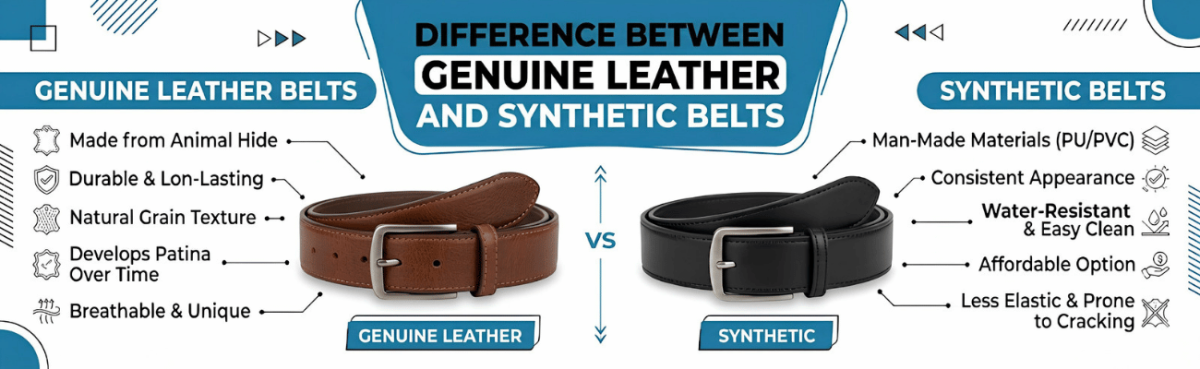
The genuine leather belt is made from animal hide that is processed into leather. The material features outstanding strength, flexibility, and an original texture that remains intact, providing durability for extended use. The leather develops a softer texture over time and acquires an attractive appearance.
The belts serve as essential components for formal attire, premium uniforms, office wear and daily use over extended periods.
What Is a Synthetic Belt?
A synthetic belt is made from artificial materials, including PU (polyurethane), PVC, and other leather alternatives. The belts have a leather look yet offer a more affordable price point.
The products are commonly used in school uniforms, fashion belts, and budget-friendly product categories.
Genuine Leather vs Synthetic Belts: Quick Comparison Table
|
Feature |
Genuine Leather Belt |
Synthetic Belt |
|
Material |
Natural leather |
Artificial material |
|
Durability |
High |
Medium |
|
Price |
Higher |
Lower |
|
Comfort |
Improves with use |
Good initially |
|
Appearance |
Rich and premium |
Stylish and uniform |
|
Water Resistance |
Moderate |
Better resistance |
|
Maintenance |
Needs care |
Easy to clean |
|
Lifespan |
Long-lasting |
Shorter lifespan |
|
Best Use |
Office, premium uniforms |
School, budget uniforms |
Genuine Leather vs Synthetic Belts: 5 Key Differences You Should Know
The five fundamental elements that determine value, comfort, and long-term performance should be assessed before you purchase a belt for school uniforms, office attire, and everyday needs.
-
Durability: Which Belt Lasts Longer?
The better option for extended product life lies between certified products and leather materials, both of which provide superior longevity. A good leather belt can last for years when used properly. The material maintains better performance throughout most of its expected life span. The material becomes softer with age instead of losing its strength. Synthetic belts develop cracks, peeling, and shape distortion after continuous intense use. Synthetic belts made from decent materials continue to deliver acceptable performance over their typical operational duration. The answer to which is better, leather or synthetic belt,s leads to leather as the most durable option.
-
Cost: Which One Is More Affordable?
Synthetic belts become the preferred choice at this point. Leather belts cost more because real leather processing is expensive. The process of crafting leather products requires specialised skills, which result in increased production costs. Synthetic belts are cheaper and easier to produce. That makes them useful for schools, institutions, and large organisations that need bulk quantities. For example, many buyers searching for the best belts for school uniforms prefer synthetic belts because children outgrow accessories quickly.
-
Look and Style Difference
Leather belts feature a natural grain pattern and a timeless finish. The products tend to have a better formal appearance than other items. Synthetic belts come in many colours, textures, and modern designs. The products function well when used for current fashion trends and official dress requirements. The leather material creates a professional business appearance. The synthetic belts serve as a practical solution for bulk design requirements which apply to both student and staff applications.
-
Comfort in Daily Wear
The three elements that determine comfort are how well the buckle system operates, whether the belt stretches, and whether the belt length suits your body size. Leather belts usually become more comfortable with time because they adjust naturally to the body. Synthetic belts start soft, but their stiffness increases once the material meets certain quality standards. Leather products provide greater comfort during extended office hours and for professional daily wear.
-
Maintenance and Cleaning
The cleaning process for synthetic belts is simpler. The standard cleaning process needs only a damp cleaning cloth. Leather belts require additional maintenance tasks. The product requires storage in dry conditions and treatment with conditioning agents to maintain its flexibility. The synthetic belts are a solution that requires minimal upkeep to maintain student and staff uniforms.
How to Identify a Genuine Leather Belt
The synthetic belts appear to be the same as real leather, which creates confusion for buyers. The following methods provide simple ways to check how to identify a genuine leather belt.
-
Smell Test: The natural earth scent of real leather stays intact. Synthetic belts may smell like plastic or chemicals.
-
Texture Check: Leather surfaces contain small natural variations which occur in their material composition. Synthetic surfaces often look too perfect.
-
Flexibility: Leather bends without restriction. Poor synthetic material bends at right angles.
-
Edge Inspection: The leather material creates fibre edges which form a layered pattern. The synthetic material produces edges which maintain an artificial appearance.
-
Label or Supplier Trust: The process of purchasing leather belts requires you to select between established leather belt manufacturers in India and authorised distribution channels.
Synthetic Belt vs Leather Belt for School Uniforms
Schools require belts that maintain a tidy appearance, provide cost-effective solutions and offer simple methods for belt replacement. The educational system needs synthetic belts and leather belts so schools can assess both options, as their requirements demand.
Synthetic Belts for Schools:
-
Cost-effective for bulk orders
-
Uniform appearance
-
Easy cleaning
Good for growing children
Leather Belts for Schools:
-
Strong and durable
-
Better premium image
Suitable for senior students or premium institutions
The material creates a more luxurious appearance for leather products. The product fits the requirements of both advanced students and institutions that demand premium quality.
Uniform suppliers like Shri Hosiery India provide schools with practical solutions that match their budget needs, branding requirements, and students' age requirements.
Conclusion
You should choose leather as your material when you need a high-quality product that lasts a long time and maintains a formal appearance. If you want budget-friendly options that require minimal upkeep for extended use in schools and workplaces, choose synthetic materials. The debate between real leather and synthetic belts does not have a clear champion because multiple factors must be considered. Your requirement determines which option serves you best. Select a value which goes beyond basic cost.